Prototypes from the lab floor.
{{ card.title }}
{{ card.body }}

Peer-reviewed foundations, not speculation.


Published Research
Flybits Labs doesn't just follow the science, it helps shape it. Our partnerships with world-leading academic institutions ensure every initiative is built on rigorous, peer-reviewed foundations, not speculation.
Imagine, Don’t Narrate: The Generative Bottleneck in World Models of Interaction Dynamics (Paper Submitted)
Daniel Platnick, Marjan Alirezaie and Hossein Rahnama
A world model that imagines future interaction in representation space rather than narrating it in language, lifting the bottleneck that caps how well agents anticipate behaviour.
Situation Graph Prediction: Structured Perspective Inference for User Modeling
Daniel Platnick, Marjan Alirezaie, Chris Shin, and Hossein Rahnama
A prediction method that extracts user perspective as an explainable situation graph, grounding every inference in evidence already present in the person’s own data.
Structured Personalization: Modeling Constraints as Matroids for Data-Minimal LLM Agents
Daniel Platnick, Marjan Alirezaie, Hossein Rahnama
A constraint algorithm that models permissions as matroids, proving mathematically that maximum personalization is reachable while the smallest possible amount of user context is shared.
Perspective-Aware AI in Extended Reality
Platnick, D., Gruener, M., Alirezaie, M., Larson, K., Newman, D.J., Rahnama, H. (2026). Perspective-Aware AI in Extended Reality. In: De Paolis, L.T., Arpaia, P., Sacco, M. (eds) Extended Reality. XR Salento 2025. Lecture Notes in Computer Science, vol 15743. Springer, Cham.
A closed-loop framework that drives immersive environments from Chronicles, so an XR scene responds to a person’s accumulated identity rather than only their most recent action.
ID-RAG: Identity Retrieval-Augmented Generation for Long-Horizon Persona Coherence in Generative Agents
Daniel Platnick, Mohamed E. Bengueddache, Marjan Alirezaie, Dava J. Newman, Alex “Sandy” Pentland and Hossein Rahnama
An identity retrieval layer that queries a knowledge graph of beliefs, traits and values mid-decision, holding a generative agent’s persona coherent across long-horizon tasks.
Perspective-Aware AI in Extended Reality
Daniel Platnick, Matti Gruener, Marjan Alirezaie, Kent Larson, Dava J. Newman and Hossein Rahnama
A foundational architecture pairing perspective-aware identity models with extended reality, demonstrated in proof-of-concept scenarios where a person’s digital footprint shapes the immersive scene around them.
Perspective-Aware Ai (PAi) for Augmenting Critical Decision Making
Marjan Alirezaie, Daniel Platnick, Hossein Rahnama, et al. Perspective-Aware Ai (PAi) for Augmenting Critical Decision Making. TechRxiv. January 04, 2025. DOI: 10.36227/techrxiv.173602815.51151031/v1
A federated decision-support approach that surfaces gaps between differing perspectives and simulates outcomes, keeping data ownership with each participant while scaling to complex decisions.
Enabling Perspective-Aware AI with Contextual Scene Graph Generation
Alirezaie, Marjan, Hossein Rahnama, and Alex Pentland. “Structural Learning in the design of Perspective-Aware AI Systems using Knowledge Graphs.” Proceedings of the AAAI. 2024.
An image-to-graph model that reads the full context of a scene, advancing human–machine interaction by representing several perspectives on the same moment at once.
Structural Learning in the design of Perspective-Aware AI Systems using Knowledge Graphs
Daniel Platnick, Marjan Alirezaie and Hossein Rahnama
A structure-learning method that derives time-aware context graphs straight from raw data, letting a system represent an entire situation instead of classifying a single moment.
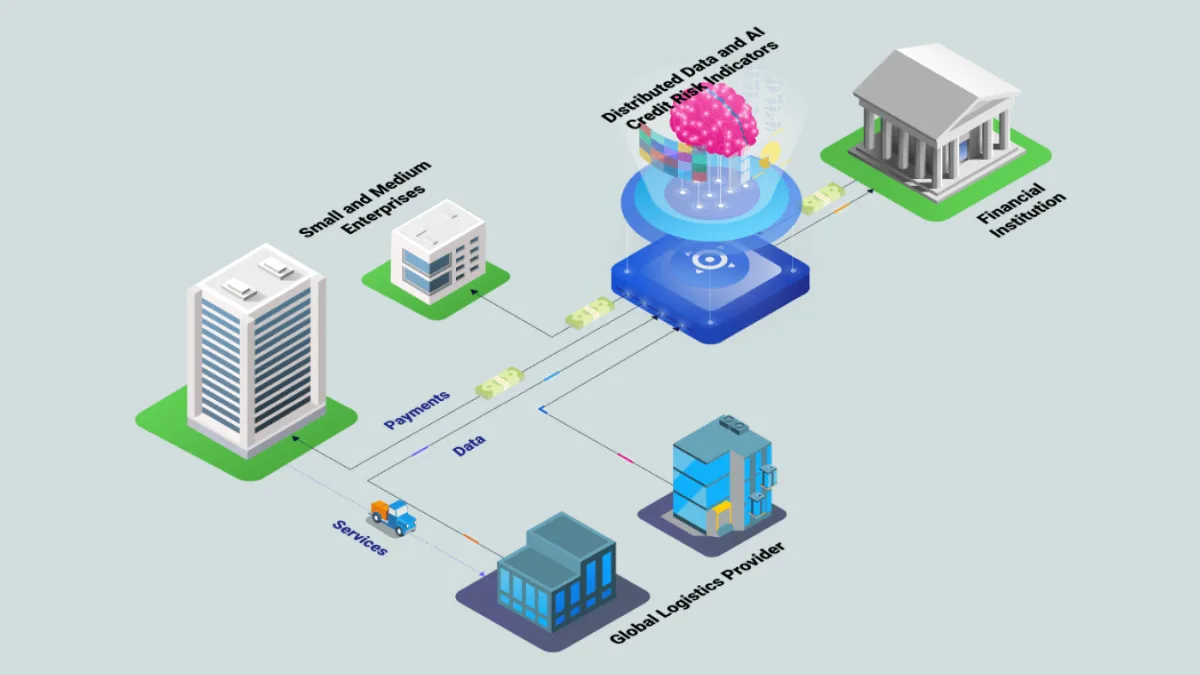
Decentralized Data & Artificial Intelligence Orchestration for Transparent and Efficient Small and Medium-Sized Enterprises Trade Financing
Alirezaie, M.; Hoffman, W.; Zabihi, P.; Rahnama, H.; Pentland, A. Decentralized Data and Artificial Intelligence Orchestration for Transparent and Efficient Small and Medium-Sized Enterprises Trade Financing. J. Risk Financial Manag. 2024, 17, 38.
An orchestration model for trade finance where lenders and suppliers act on shared intelligence, while each party keeps custody of its own underlying records.
Why voters who value democracy participate in democratic backsliding
Braley, A., Lenz, G.S., Adjodah, D. et al. Why voters who value democracy participate in democratic backsliding. Nat Hum Behav (2023).
A large behavioural study establishing that stated values predict choices poorly once real trade-offs appear, evidence that people are modelled better by conduct than by words.
A Neural-Symbolic Approach for User Mental Modeling: A Step Towards Building Exchangeable Identities
H. Rahnama, M. Alirezaie, and A. Pentland (2021) A Neural-Symbolic Approach for User Mental Modeling: A Step Towards Building Exchangeable Identities, AAAI 2021 Spring Symposium on Combining Machine Learning and Knowledge Engineering
A hybrid architecture pairing neural learning with symbolic reasoning, so a user’s mental model becomes structured, inspectable knowledge rather than an opaque, unexplainable embedding.
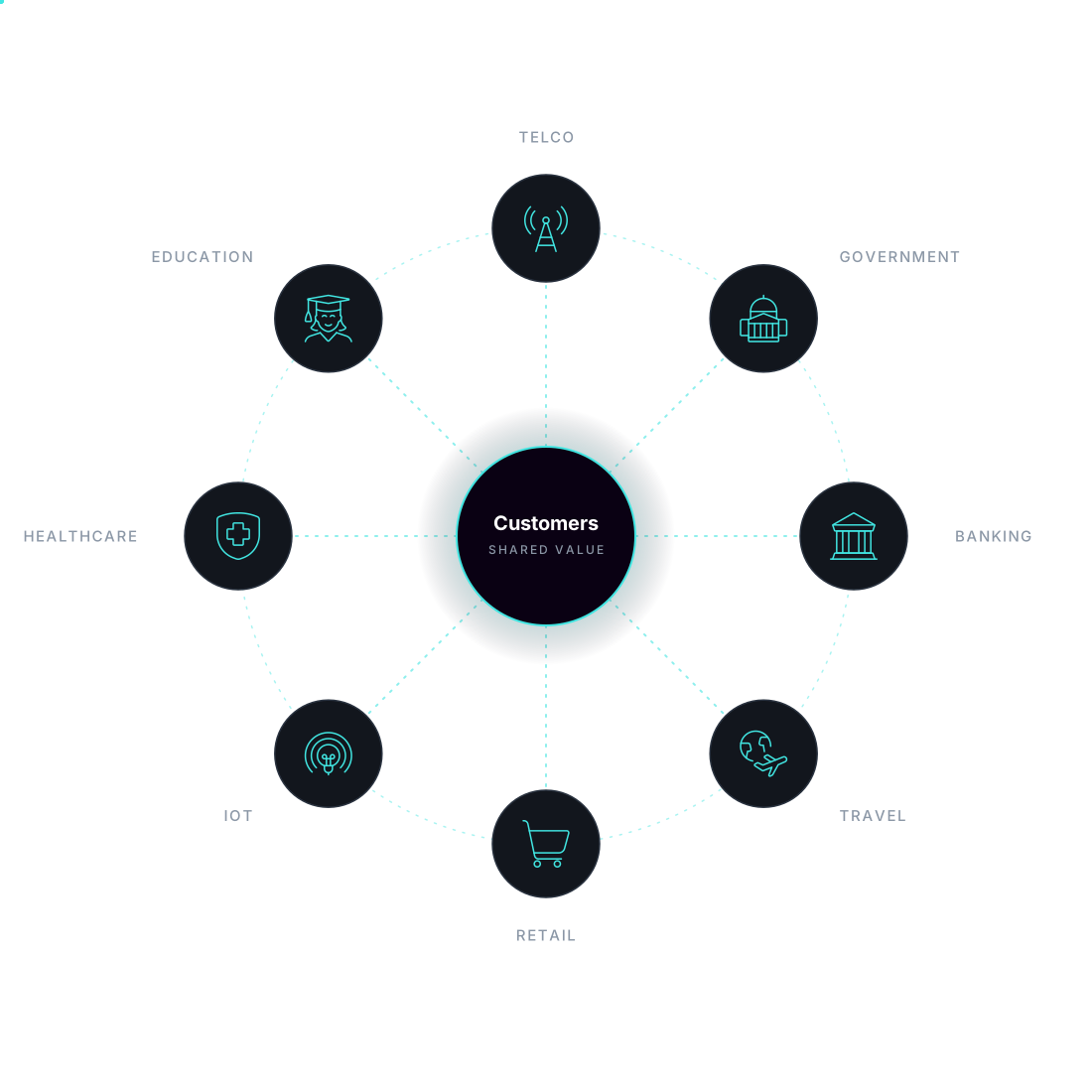
A data ecosystem across industries.
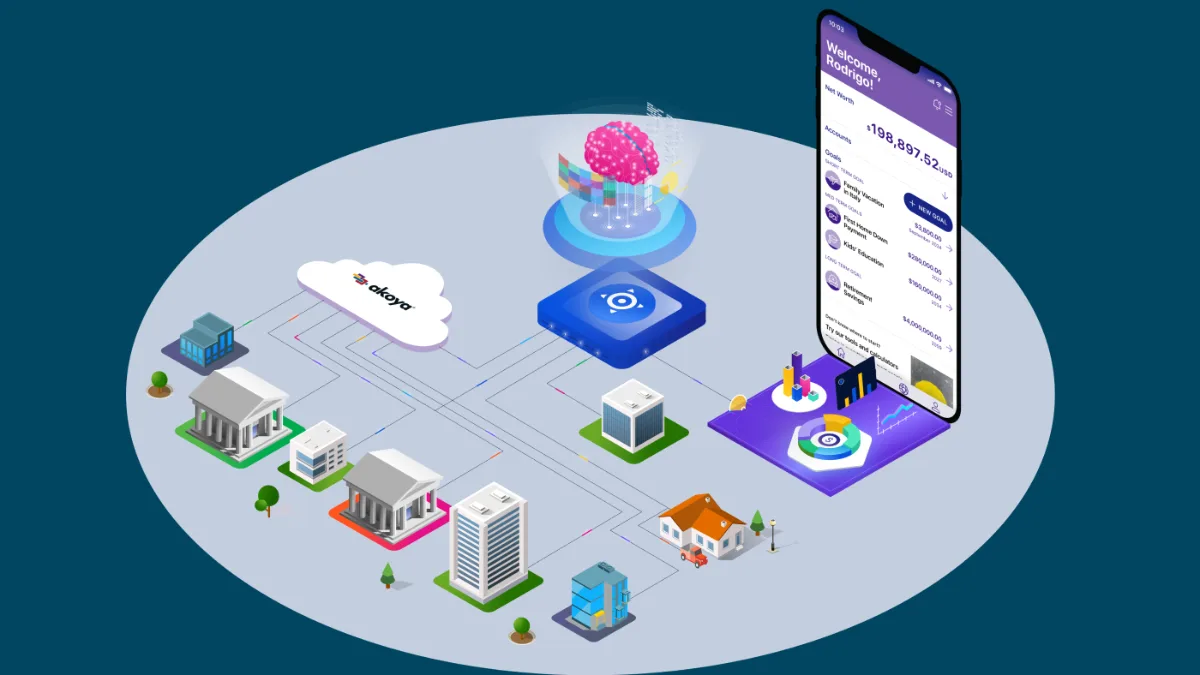
By unifying proprietary data with third-party and contextual sources, customer-centric leaders in financial services can meet customers' needs in real time, without having to share the underlying data itself. It's an ability that catalyzes the formation of data alliances — large trust networks of associated companies that work together to build a valuable ecosystem around customers.